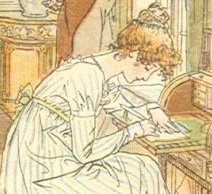
You comprehend my path and my lying down,
And are acquainted with ALL MY WAYS!
Psalm 139:3
Wednesday, April 09, 2008
All My Ways
I'm so glad that He's acquainted with ALL MY WAYS!

Saturday, April 05, 2008
The Subjunctive in the News
I came across this blog post on Geraldine Ferraro's (in)?famous quote about Barack Obama, "If Obama was a white man, he would not be in this position.", which focuses, more interestingly (to me), on the grammar of the sentence.
You can read the entire post at The Language Log: The Subective Tense:
Seems this particular language nitpicker was outraged because Ms. Ferraro neglected to use the subjunctive form which should have been: "If Obama were a white man,...". Of course the irony of the nitpicking is that he wrongly identifies the subjunctive mood as the subjective tense and then laments, "Has all our education been for naught?" Apparently his education was. I guess if you're going to nit-pick, it's a good idea to get your terms right.
You can read the entire post at The Language Log: The Subective Tense:
Subjective tense
William Safire's most recent "On Language" column (NYT Magazine 3/30/08, p. 18) looks at the now-famous quote from Geraldine Ferraro, "If Obama was a white man, he would not be in this position." Then comes a parenthetical digression on grammar:
"Get this," Sam Pakenham-Walsh, member of the Nitpickers League, said in an e-mail message, "we no longer use the subjective tense! Has all our education been for naught?" Because Ferraro's statement posed a condition contrary to fact, her "if Obama was a white man" should have been were.
Yes, "subjective tense", in a grammar peeve. Has all our education been for naught?
Seems this particular language nitpicker was outraged because Ms. Ferraro neglected to use the subjunctive form which should have been: "If Obama were a white man,...". Of course the irony of the nitpicking is that he wrongly identifies the subjunctive mood as the subjective tense and then laments, "Has all our education been for naught?" Apparently his education was. I guess if you're going to nit-pick, it's a good idea to get your terms right.
Friday, March 28, 2008
The Robots are Coming!

Have you seen the latest? Well maybe it's not the latest, but I just saw this on amazon.com today. It's Pleo, the dinosaur pet that learns and changes. It actually looks pretty cute. If I had an extra $300.00 to spend on a pet dinosaur I'd probably buy one.
Play Pleo Video
Sunday, March 23, 2008
The Earliest Easter in our Lifetime
Today is Resurrection Sunday, more commonly known as Easter. It's the day set aside to celebrate Jesus' resurrection from the dead.
HE IS RISEN!
We know from the New Testament that Jesus was crucified on Passover and rose from the dead on the 3rd day, so why are Easter and Passover almost a month apart this year? Here's an excerpt from Chuck Missler's K-house newsletter that explains the discrepancy:
HE IS RISEN!
We know from the New Testament that Jesus was crucified on Passover and rose from the dead on the 3rd day, so why are Easter and Passover almost a month apart this year? Here's an excerpt from Chuck Missler's K-house newsletter that explains the discrepancy:
A QUESTION OF DATES
This year we celebrate Easter on March 23rd, almost a month before Passover. Yet Christ was crucified on Passover, so why are they an entire month apart?
Passover is observed on the 14th day of the month of Nisan, the first month of the religious year. Jesus was crucified on Passover and rose on the 3rd day, appropriately on the Feast of Firstfruits (the morning after the Sabbath after Passover). This was always on a Sunday, irrespective of the day of the week of Passover. Thus, Christians have traditionally celebrated His resurrection on Sunday.
In the West, most of our major holidays occur conveniently on fixed dates. However unless you are an astronomer, the date of Easter can be much more difficult to determine. That's because its date is set by the lunar calendar. The rules for determining the date of Easter were imposed by Constantine and the Council of Nicaea in AD 325, long before the advent of the Gregorian calendar that is most widely used in the world today. Easter is celebrated on the first Sunday, after the first full moon, after the spring equinox. Therefore, it is held on a Sunday on varying dates between March 22 and April 25.
This year Passover begins at sunset on April 19th, almost a month after Easter, in part because it is a Jewish leap year. During leap years, an entire month is added to the Hebrew calendar. Furthermore, this year Easter comes early, very early. In fact, the next time Easter will fall this early will be in the year 2228 – not for another 220 years. The last time it fell on March 23rd was the year 1913. Easter sometimes falls on March 22nd, a day earlier, however that hasn't happened since 1818 and won't happen again until the year 2285 – in another 277 years. What does that mean? No one alive today has or will ever celebrate it any earlier.
Saturday, March 22, 2008
Raising Successful Kids
The Secret to Raising Smart Kids
Hint: Don't tell your kids that they are. More than three decades of research shows that a focus on effort—not on intelligence or ability—is key to success in school and in life
The head-coach/owner of the gym where Aimee lives, uh, I mean, spends inordinate amounts of her time training with her competitive gymnastics team, scheduled an all-team parent meeting last Friday night. One of the main agenda items was a discussion of the above article from Scientific American. The article relates not only to academic success, but also to success in any kind of endeavor that requires effort.
While talent certainly is important to success in gymnastics, it isn't necessarily the most talented kids that are the most successful. This article gives a great explanation of why that is.
Monday, March 17, 2008
St. Patty's Day, or Is it?
Top O’ the Mornin to You!
Happy St. Paddy’s Day!
Oh but wait, is today really St. Patrick’s Day? Well it’s March 17th, isn’t it? Isn’t March 17th St. Patrick’s day? Well, yes and no. Because of the extremely early occurrence of Easter this year, St. Patrick’s Day occurs during the week preceding Easter, known as Holy Week. This overlap is causing some conflict for St. Patrick’s Day celebrations. According to the BBC News, Why is it 'not' St Patrick's Day today?:
The situation in the U.S seems even more complicated. Different cities have responded in different ways to the dilemma:
Savannah, Georgia, Milwaukee, and Philadelphia moved their St. Patrick’s Day parades and celebrations to accommodate the wishes of Catholic leaders.
New York and Columbus, Ohio are having their parades as scheduled, on Monday.
From CNN, St. Patrick's Day causing Catholic dilemma:
Well, I don’t know about you, but I’m wearing green TODAY!
Happy St. Paddy’s Day!
Oh but wait, is today really St. Patrick’s Day? Well it’s March 17th, isn’t it? Isn’t March 17th St. Patrick’s day? Well, yes and no. Because of the extremely early occurrence of Easter this year, St. Patrick’s Day occurs during the week preceding Easter, known as Holy Week. This overlap is causing some conflict for St. Patrick’s Day celebrations. According to the BBC News, Why is it 'not' St Patrick's Day today?:
The Catholic Church in England and Wales says St Patrick's Day is simply not on the calendar of feast days this year. This week is known as Holy Week in the church and takes precedence over all saint's days.
Any saint's feast day that clashes with it is omitted from the calendar.
But the position is different in the Republic of Ireland, where St Patrick's Day was observed on Saturday 15 March, instead of Monday 17 March.
The situation in the U.S seems even more complicated. Different cities have responded in different ways to the dilemma:
Savannah, Georgia, Milwaukee, and Philadelphia moved their St. Patrick’s Day parades and celebrations to accommodate the wishes of Catholic leaders.
New York and Columbus, Ohio are having their parades as scheduled, on Monday.
From CNN, St. Patrick's Day causing Catholic dilemma:
For the first time since 1940, St. Patrick's Day will fall during Holy Week, the sacred seven days preceding Easter.
Because of the overlap, liturgical rules dictate that no Mass in honor of the saint can be celebrated on Monday, March 17, according to the U.S. Conference of Catholic Bishops.
But a few Roman Catholic leaders are asking for even more moderation in their dioceses: They want parades and other festivities kept out of Holy Week as well.
Well, I don’t know about you, but I’m wearing green TODAY!
Sunday, March 16, 2008
A Week for Holidays
This is a busy week, crammed chock full of holidays. Let’s see:
Today is Sunday, March 16 : Palm Sunday, Beginning of Holy Week
Monday, March 17: St. Patrick’s Day
Thursday, March 20: First Day of Spring
Thursday, March 20: Purim begins at Sunset in Israel
Friday, March 21: Good Friday, Purim Celebrated in Israel
Saturday, March 22: Purim celebrated outside of Israel
Saturday, March 15, 2008
Ides of March
Today, March 15, is the anniversary of Julius' Caesar's assasination. Here is an excerpt from an interesting blog post about Caesar:
Read the entire post here.
I'll put it my to-read list!
Read the entire post here.
Caesar was a man of talent made great by the exceptional times he lived in. As Machiavelli said, “prowess” must also have “opportunity” or it cannot make itself felt. And so felt and remembered Caesar would be. As Christian Meier put it, "The way in which Caesar played this game--risking his very existence and then raising the stakes, seeking out immense opportunities, finding them and savoring them--affords an absorbing spectacle." I highly recommend on some rainy day you pickup a copy of Caesar's commentaries and absorb the spectacle.
Remembering Caesar on the Ides of March.
Hail Caesar!
I'll put it my to-read list!
Monday, March 10, 2008
How Do You Spell Relief?
I received this in an email this morning...
Whoopee!
(When there's no "Complete Jane Austen" on Sunday night, there's nothing else to do but e-file taxes.)
Congratulations! The IRS has accepted your federal tax return. There's nothing else you need to do.
Whoopee!
(When there's no "Complete Jane Austen" on Sunday night, there's nothing else to do but e-file taxes.)
Friday, March 07, 2008
For the fun of it...

Here's a fun link to a Nostalgic Candy store. It brought back memories of riding bikes to the corner store and coming home with a sack of loot uh, I mean candy. Just looking at those pictures makes my teeth ache.
Enjoy!
Nostalgic Candy.com
Tuesday, March 04, 2008
Pwnage?
I learned something new today about Internetspeak or "Leet" from Mags at the Jane Austen blog. She was so kind as to mention my blog post about Jane Austen's use of the subjunctive on the Jane Austen blog. The title of the post is: "How does one say
“pwn3d” in the subjunctive?"
From Wikipedia:
A 3 is commonly used to replace the letter e as in pwn3d.
Thanks Mags, for mentioning me so kindly on your blog and for the introduction to "Leet".
“pwn3d” in the subjunctive?"
From Wikipedia:
Owned and Pwned
Main articles: Owned and Pwned
Owned and pwned both refer to the domination of a player in a video game or argument (rather than just a win), or the successful hacking of a website or computer.[1][17][23] For example, in a multiplayer first-person shooter game, a player with a default starting gun defeats an opponent carrying a vastly superior weapon. This would indicate dominant skill in the player with the inferior weapon, who outplayed (owned or pwned) the player with superior firepower. As in a common characteristic of Leet, the terms have also been adapted into noun and adjective forms,[17] ownage and pwnage, which can refer to the situation of pwning or to the superiority of its subject (e.g., "He is a very good player. He is pwnage.").
A 3 is commonly used to replace the letter e as in pwn3d.
Thanks Mags, for mentioning me so kindly on your blog and for the introduction to "Leet".
Friday, February 29, 2008
Don't [sic] Jane Austen

"A woman, especially,if she have [sic] the misfortune of knowing anything,should conceal it as well as she can."
Jane Austen,
Northanger Abbey
Back to Jane Austen and subjunctives from my previous post...
The picture above is from page 11 of Masterpiece's The Complete Guide to Teaching Jane Austen, a beautiful, full-color, teaching guide aimed at educators who want to use the film adaptations of Jane Austen's works in the classroom. I was looking through the guide and came across the above-referenced quote with the bracketed [sic].
Inserting a [sic] in a quoted text draws attention to the fact that an apparent error in spelling or grammar is part of the original and not an editorial blunder:
Longman Dictionary of Contemporary English defines sic as follows:
sic: Latin used after a word that you have copied in order to show that you know it was not spelled or used correctly.
and the The American Heritage® New Dictionary of Cultural Literacy:
sic: A Latin word for “thus,” used to indicate that an apparent error is part of quoted material and not an editorial mistake.
So, what's wrong with the quote? Obviously, a present-day speaker would most likely say, "A woman, especially,if she has the misfortune of knowing anything...", well actually a modern speaker probably wouldn't give this kind of advice to a young woman, but that's a cultural difference and we're talking about grammar here. And then there's the author's intent, Jane Austen was a master of verbal irony and satire, so even though she seems to be telling women to hide their "smarts", she is really exposing such a view to criticism, but again, I digress from the grammatical point I was making.
Back to the point, is "if she have the misfortune of knowing anything..." grammatically incorrect? Should it be, "if she has the misfortune of knowing anything..." The answer lies in the grammatical mood (also called mode) of the verb (have/has), and progressive dwindling of the use of the subjunctive in English. The word if, lets us know that this is a conditional statement.
The mood or mode of a verb is "the manner in which the action, being, or state is expressed. There are five modes: the indicative, subjunctive, potentioal, imperative, and infinitive. The indicative mode asserts a thing as a fact, ... as, "The man walks,"
"The subjunctive mode asserts a thing as doubtful, as a wish, a supposition, or a future contingency; as, "If this be true, all will end well,..."(Harvey's Revised English Grammar)
So what form should the subjunctive of the verb "to have" take in the quoted sentence, "A woman, especially, if she have the misfortune of knowing anything, should conceal it as well as she can."? To find the answer to this, (I know my readers are burning up with desire for the answer to this question, as I was.) I had to look at 18th century English grammar:
from : The Treatment of the Subjunctive in Eighteenth-century Grammars of English by Anita Auer:
White (White, James. The English Verb (London, 1761))describes the formal aspect of the subjunctive by explaining the way it differs from the indicative mood:
All the difference, then between the Present of the Subjunctive Mood, and the Present of the Indicative, is; that the word expressive of the Verb undergoes changes of termination in several of the persons of the Present Tense of the Indicative, but none in the persons of the Subjunctive. Thus, in the Present of the Indicative, have changes into hast or have, has or hath, in the Person of the Singular Number, before in the Plural it return again to have; whereas, in the Subjunctive Mood, it continues have without variation, in every Person of each Number.
There it is! Eureka! The subjunctive form of the verb "to have" stays the same, "have", even in the singular, "I have", "You have", "He, she it have".
I rest my case! Don't go [siccing] Jane Austen! She was a master of polite English grammar, and knew her subjunctives from her indicatives; we should all be so nice!
(To see Henry Tilney's lamentation over the degradation of the word nice in Northanger Abbey, click on the bold word nice, and read the page, or after clicking, search on the page for nice.)
Thursday, February 28, 2008
Cherry Blossoms and Subjunctives

I was going to post a picture I took of my neighbor's cherry tree covered with pretty blossoms. I just took the picture this afternoon, (it looks so pretty in the front of their house), but I can't find the cable to connect my camera to the computer, and I only have a minute to post this so I googled this picture instead. I'm sure it's better than the one I took anyway. (thanks to http://www.alexisleon.com/figs/cherry.jpg for the picture)
Oh yeah, and I do have something to say about subjunctives (and Jane Austen of course) but it will have to wair because I just got a call to pick up my son and I need to be back by 4 to take my daughter to gymnastics... gotta run!
Monday, February 25, 2008
All Jane Austen, All the Time

So it seems...
To make the most of the Masterpiece's presentation of The Complete Jane Austen on PBS Sunday nights, I've been re-reading all of Jane Austen's novels and watching as many film adaptations as I can. I picked up Sense and Sensibility from the library and, I rented the DVD of the Jane Austen Book Club and watched it this weekend. So, it's not surprising that I have Jane Austin "on the brain". There are worse things to be stuck on I guess.
It was Grigg from the Jane Austen Book Club who said, "All Jane Austen All the Time." Last night we watched the final episode of Pride and Prejudice (1995) with the dreamy Colin Firth as Mr. Darcy.
One of the things that makes Pride and Prejudice such a classic work of literature is the sterling cast of supporting, perfectly pitched, comic characters. The genre of Pride and Prejudice is a comedy of manners and the manners of the minor characters are truly comical. One of the most unforgettable comic characters of all times is the smarmy Rev. Mr. Collins. Tonight as we sat down for our Sunday family fellowship time, Chuck threatened to read Fordyce’s sermons to us for an hour or two, for our moral edification. (See, even my macho husband is being sucked into the Austen frenzy.)
And who can forget the annoyingly loud and nervous Mrs. Bennet, along with her permanently bemused husband, Mr. Bennet. To my mind the most perfect Mr. Bennet is Donald Sutherland in PandP 2005, in fact the most perfectly cast and perfectly acted character in any of the Jane Austin adaptations I’ve seen is Sutherland’s Mr. Bennet.
Another supporting character is Lizzy’s pedantic sister Mary Bennet. Mary spends all her time with her nose in a book and thinks that books alone make her wise and someone worth listening to. In honor of the comic supporting cast of Pride and Prejudice here are some choice Mary Bennet quotes:
Mary had neither genius nor taste; and though vanity had given her application, it had given her likewise a pedantic air and conceited manner, which would have injured a higher degree of excellence than she had reached.
…she was eagerly succeeded at the instrument by her sister Mary, who having, in consequence of being the only plain one in the family, worked hard for knowledge and accomplishments, was always impatient for display.
“…What say you, Mary? for you are a young lady of deep reflection I know, and read great books, and make extracts."
Mary wished to say something very sensible, but knew not how.
They found Mary, as usual, deep in the study of thorough bass and human nature; and had some new extracts to admire, and some new observations of thread-bare morality to listen to.
And even Mary could assure her family that she had no disinclination for it.
"While I can have my mornings to myself," said she, "it is enough. -- I think it no sacrifice to join occasionally in evening engagements. Society has claims on us all; and I profess myself one of those who consider intervals of recreation and amusement as desirable for every body."
"Pride," observed Mary, who piqued herself upon the solidity of her reflections, "is a very common failing I believe. By all that I have ever read, I am convinced that it is very common indeed, that human nature is particularly prone to it, and that there are very few of us who do not cherish a feeling of self-complacency on the score of some quality or other, real or imaginary. Vanity and pride are different things, though the words are often used synonomously. A person may be proud without being vain. Pride relates more to our opinion of ourselves, vanity to what we would have others think of us."
"I admire the activity of your benevolence," observed Mary, "but every impulse of feeling should be guided by reason; and, in my opinion, exertion should always be in proportion to what is required."
Wednesday, February 20, 2008
Gone Too Soon

My sixteen year old son Eric walked in the door on Monday evening with a disturbed look on his face. "One of my good friends from school died this weekend", he said. "Look Mom, here he is on Myspace." A good-looking blonde kid's picture stared me in the face.
"He died in a dirt-biking accident. A friend texted me this morning about it, but I thought it was a bad joke. I can't believe he's gone. I just talked to him Thursday after school. He's the last person I would think wouldn't make it."
Fifteen year old Taylor LaKamp was killed this President's day weekend when his dirt bike collided with another biker while making a jump. The funeral is this Friday at 11am at Santa Clarita's Eternal Valley. I didn't know the kid but he looks like he was a great kid, good-looking, with his whole life ahead of him.
My son says he's okay, but after school yesterday he came home and went to his room. I heard him playing his guitar and when he came out of his room his eyes were red like he'd been crying. I know he wouldn't cry in front of me, but I know he's grieving and it's very important to him to be at the funeral on Friday, even though it's in the middle of a school day.
I'm praying for Taylor's family and friends to be comforted in the midst of this tragedy. Read the Bakersfield Newspaper report here.
Saturday, February 16, 2008
Getting "Crabbey" with Jane Austen
 On Sunday, Feb 3, I watched Masterpiece's, The Complete Jane Austen's new biopic Miss Austen Regrets. One scene shows Miss Austen's introduction to a young MP (member of parliament) named Stephen Washington. The meeting takes place in a library, and the young man begins to quote a poet named Crabbe:
"All around these silent walks I tread
These are the lasting memories of the dead."
Since I collect library and book quotes and I had never heard this one before, I had to find out more about Crabbe and the source of the quote.I found that George Crabbe was one of Jane Austen's favorite poets, and that the source of the quote is a poem he wrote called The Library. It's a very long poem, but here is the section that the quote came from:
With awe, around these silent walks I tread;
These are the lasting mansions of the dead:-
"The dead!" methinks a thousand tongues reply;
"These are the tombs of such as cannot die!"
Crown'd with eternal fame, they sit sublime,
"And laugh at all the little strife of time."
Hail, then, immortals! ye who shine above,
Each, in his sphere, the literary Jove;
And ye the common people of these skies,
A humbler crowd of nameless deities;
Whether 'tis yours to lead the willing mind
Through History's mazes, and the turnings find;
Or, whether led by Science, ye retire,
Lost and bewilder'd in the vast desire;
Whether the Muse invites you to her bowers,
And crowns your placid brows with living flowers;
Or godlike Wisdom teaches you to show
The noblest road to happiness below;
Or men and manners prompt the easy page
To mark the flying follies of the age:
Whatever good ye boast, that good impart;
Inform the head and rectify the heart.
Crabbe also seems to have been Jane Austen's source for the name of the heroine of Mansfield Park, Fanny Price.
"In The Parish Register, Part II (1807), Jane Austen’s favourite poet Crabbe had written:
Sir Edward is an amorous knight
And maidens chaste and lovely shun his sight;
His bailiff’s daughter suited much his taste,
For Fanny Price was lovely and was chaste”
(from E.E. Duncan-Jones in Jane Austen and Crabbe, The Review of English Studies, 1954) ht: oldgreypony
Crabbe also appears on a table in Fanny Price's study. The speaker in the following excerpt is Fanny's cousin, Edmund Bertram, speaking to Fanny:
Mansfield Park
Volume I
Chapter 16
You, in the meanwhile, will be taking a trip into China, I suppose. How does Lord Macartney go on?"--opening a volume on the table and then taking up some others. "And here are Crabbe's Tales, and the Idler, at hand to relieve you, if you tire of your great book. I admire your little establishment exceedingly; and as soon as I am gone, you will empty your head of all this nonsense of acting, and sit comfortably down to your table. But do not stay here to be cold."
Thursday, February 14, 2008
Valentine's Day love Poem
Invitation to Love
by Paul Laurence Dunbar
COME when the nights are bright with stars
Or when the moon is mellow;
Come when the sun his golden bars
Drops on the hay-field yellow.
Come in the twilight soft and gray,
Come in the night or come in the day,
Come, O love, whene'er you may,
And you are welcome, welcome.
You are sweet, O Love, dear Love,
You are soft as the nesting dove.
Come to my heart and bring it rest
As the bird flies home to its welcome nest.
Come when my heart is full of grief
Or when my heart is merry;
Come with the falling of the leaf
Or with the redd'ning cherry.
Come when the year's first blossom blows,
Come when the summer gleams and glows,
Come with the winter's drifting snows,
And you are welcome, welcome.
Saturday, February 09, 2008
How to Marry a Millionaire

Watch PBS' Masterpiece Pride and Prejudice tomorrow night, Sunday, Feb. 10, to find out. (You'll have to come back on the 17th and 24th to catch the whole story.)
IT is a truth universally acknowledged, that a single man in possession of a good fortune, must be in want of a wife.
Wednesday, January 30, 2008
Lover's Vows
It's been too long since my last post.
Going on with the Jane Austen theme, I've been enjoying immensely the Sunday night Masterpiece Jane Austen novels adapted for TV. Mansfield Park was the offering last Sunday. Fanny Price is the heroine of Mansfield Park and one of my favorite Jane Austen characters. Many people feel Fanny is too tame and too much of a goody-two shoes to be a favorite heroine. But I like her quiet ways and her absolute confidence to do the right thing in spite of her anxiety and fears and in the face of strong opposition.
The latest PBS version of Mansfield Park stars Billie Piper as Fanny. The character is written for the movie with a bit more spunk than comes across in the book. Her constant running here and there in the movie is definitely not in the book. But, I like the liveliness that comes across on the screen.
One of the key plot elements in the book is the preparation for a play by the residents of Mansfield Park and their friends. The play is entitled Lovers Vows. Fanny and her cousin Bertram disapprove of the endeavor and especially the choice of the play and the decision to cast the engaged Maria Bertram in the part of Agatha (the victim of a seduction and the resulting unwed pregnancy).
Reading the play helped me to understand the story of Mansfield Park better.
Fanny's Opinion of "Lovers' Vows"
More to come, got to run to take Aimee to gymnastics...
Going on with the Jane Austen theme, I've been enjoying immensely the Sunday night Masterpiece Jane Austen novels adapted for TV. Mansfield Park was the offering last Sunday. Fanny Price is the heroine of Mansfield Park and one of my favorite Jane Austen characters. Many people feel Fanny is too tame and too much of a goody-two shoes to be a favorite heroine. But I like her quiet ways and her absolute confidence to do the right thing in spite of her anxiety and fears and in the face of strong opposition.
The latest PBS version of Mansfield Park stars Billie Piper as Fanny. The character is written for the movie with a bit more spunk than comes across in the book. Her constant running here and there in the movie is definitely not in the book. But, I like the liveliness that comes across on the screen.
One of the key plot elements in the book is the preparation for a play by the residents of Mansfield Park and their friends. The play is entitled Lovers Vows. Fanny and her cousin Bertram disapprove of the endeavor and especially the choice of the play and the decision to cast the engaged Maria Bertram in the part of Agatha (the victim of a seduction and the resulting unwed pregnancy).
Reading the play helped me to understand the story of Mansfield Park better.
Fanny's Opinion of "Lovers' Vows"
From Chapter 14
The first use [Fanny] made of her solitude was to take up the volume [of "Lovers' Vows"] which had been left on the table, and begin to acquaint herself with the play of which she had heard so much. Her curiosity was all awake, and she ran through it with an eagerness which was suspended only by intervals of astonishment, that it could be chosen in the present instance—that it could be proposed and accepted in a private Theatre! Agatha and Amelia appeared to her in their different ways so totally improper for home representation—the situation of one, and the language of the other, so unfit to be expressed by any woman of modesty, that she could hardly suppose her cousins could be aware of what they were engaging in; and longed to have them roused as soon as possible by the remonstrance which Edmund would certainly make
More to come, got to run to take Aimee to gymnastics...
Thursday, January 17, 2008
Soul Piercing
The Masterpiece presentation of Persuasion on Sunday was not a disappointment. Watching Miss Anne Elliot brought back to life by the return of her true love, Captain Wentworth, after an eight year separation was quite enjoyable.
I am re-reading each of Jane Austen's 6 novels in preparation for watching the Masterpiece presentations. The climax of the novel Persuasion and the movie comes with the unveiling of one of the greatest love letters ever written (well certainly better than any I ever received.) Here is Captain Wentworth's impassioned epistle to Miss Anne Elliot, for your enjoyment and mine:
Next Sunday watch out for Gothic twists and turns in Northanger Abbey.
I am re-reading each of Jane Austen's 6 novels in preparation for watching the Masterpiece presentations. The climax of the novel Persuasion and the movie comes with the unveiling of one of the greatest love letters ever written (well certainly better than any I ever received.) Here is Captain Wentworth's impassioned epistle to Miss Anne Elliot, for your enjoyment and mine:
I can listen no longer in silence. I must speak to you by such means as are within my reach. You pierce my soul. I am half agony, half hope. Tell me not that I am too late, that such precious feelings are gone for ever. I offer myself to you again with a heart even more your own than when you almost broke it, eight years and a half ago. Dare not say that man forgets sooner than woman, that his love has an earlier death. I have loved none but you. Unjust I may have been, weak and resentful I have been, but never inconstant. You alone have brought me to Bath. For you alone, I think and plan. Have you not seen this? Can you fail to have understood my wishes? I had not waited even these ten days, could I have read your feelings, as I think you must have penetrated mine. I can hardly write. I am every instant hearing something which overpowers me. You sink your voice, but I can distinguish the tones of that voice when they would be lost on others. Too good, too excellent creature! You do us justice, indeed. You do believe that there is true attachment and constancy among men. Believe it to be most fervent, most undeviating, in F. W.
I must go, uncertain of my fate; but I shall return hither, or follow your party, as soon as possible. A word, a look, will be enough to decide whether I enter your father's house this evening or never.
Next Sunday watch out for Gothic twists and turns in Northanger Abbey.
Subscribe to:
Posts (Atom)