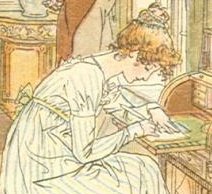
Monday, April 06, 2009

100 Books Meme: How Many have you read?

This has been around for a while, but I ran across it at the Jane Austen World and thought it was time to tally up. I think I counted 65. A couple seem to be repeats.


If you would like to participate, just copy and paste this list of books into your own blog or Facebook notes, and follow the instructions below, or add up the books you've read.

This list was compiled in the U.K. by the BBC. The average adult has read only 6 of the books on the list. (Really?)

1) Look at the list and bold those you have read.
2) Italicize those you intend to read.
3) Underline the books you love.
4) Strike out the books you have no intention of ever reading, or were forced to read at school and hated.
5) Reprint this list in your own blog.


1 Pride and Prejudice - Jane Austen
2 The Lord of the Rings - JRR Tolkien
3 Jane Eyre - Charlotte Bronte
4 The Harry Potter Series - JK Rowling
5 To Kill a Mockingbird - Harper Lee
6 The Bible
7 Wuthering Heights - Emily Bronte

8 Nineteen Eighty Four - George Orwell
9 His Dark Materials - Philip Pullman
10 Great Expectations - Charles Dickens
11 Little Women - Louisa M Alcott
12 Tess of the D'Urbervilles - Thomas Hardy
13 Catch 22 - Joseph Heller
14 Complete Works of Shakespeare
15 Rebecca - Daphne Du Maurier
16 The Hobbit - JRR Tolkien
17 Birdsong - Sebastian Faulks
18 Catcher in the Rye - JD Salinger
19 The Time Traveller's Wife - Audrey Niffenegger
20 Middlemarch - George Eliot
21 Gone With The Wind - Margaret Mitchell

22 The Great Gatsby - F Scott Fitzgerald
23 Bleak House - Charles Dickens
24 War and Peace - Leo Tolstoy
25
The Hitch Hiker's Guide to the Galaxy - Douglas Adams
26
Brideshead Revisited - Evelyn Waugh
27 Crime and Punishment - Fyodor Dostoyevsky

28 Grapes of Wrath - John Steinbeck
29 Alice in Wonderland - Lewis Carroll
30 The Wind in the Willows - Kenneth Grahame
31 Anna Karenina - Leo Tolstoy
32 David Copperfield - Charles Dickens
33 Chronicles of Narnia - CS Lewis
34 Emma - Jane Austen
35 Persuasion - Jane Austen
36 The Lion, The Witch and The
Wardrobe - CS Lewis
37 The Kite Runner - Khaled Hosseini
38 Captain Corelli's Mandolin - Louis De Bernieres
39
Memoirs of a Geisha - Arthur Golden
40 Winnie the Pooh - AA Milne
41 Animal Farm - George Orwell
42 The Da Vinci Code - Dan Brown
43 One Hundred Years of Solitude - Gabriel Garcia Marquez
44 A Prayer for Owen Meaney - John Irving
45 The Woman in White - Wilkie Collins
46 Anne of Green Gables - LM Montgomery
47 Far From The Madding Crowd - Thomas Hardy
48 The Handmaid's Tale - Margaret Atwood
49 Lord of the Flies - William Golding
50 Atonement - Ian McEwan
51 Life of Pi - Yann Martel
52 Dune - Frank Herbert
53 Cold Comfort Farm - Stella Gibbons
54 Sense and Sensibility - Jane Austen
55 A Suitable Boy - Vikram Seth
56 The Shadow of the Wind - Carlos Ruiz Zafon
57 A Tale Of Two Cities - Charles Dickens
58 Brave New World - Aldous Huxley
59 The Curious Incident of the Dog in the Night-time - Mark Haddon
60
Love In The Time Of Cholera - Gabriel Garcia Marquez
61 Of Mice and Men - John Steinbeck
62 Lolita - Vladimir Nabokov
63 The Secret History - Donna Tartt
64 The Lovely Bones - Alice Sebold
65 Count of Monte Cristo - Alexandre Dumas

66 On The Road - Jack Kerouac
67 Jude the Obscure - Thomas Hardy
68 Bridget Jones's Diary - Helen Fielding
69 Midnight's Children - Salman Rushdie
70 Moby Dick - Herman Melville
71 Oliver Twist - Charles Dickens
72 Dracula - Bram Stoker
73 The Secret Garden - Frances Hodgson Burnett
74 Notes From A Small Island - Bill Bryson
75 Ulysses - James Joyce
76 The Bell Jar - Sylvia Plath
77 Swallows and Amazons - Arthur Ransome
78 Germinal - Emile Zola
79 Vanity Fair - William Makepeace Thackeray
80 Possession - AS Byatt
81 A Christmas Carol - Charles Dickens
82 Cloud Atlas - David Mitchell
83 The Color Purple - Alice Walker
84 The Remains of the Day - Kazuo Ishiguro
85 Madame Bovary - Gustave Flaubert
86 A Fine Balance - Rohinton Mistry
87 Charlotte's Web - EB White
88 The Five People You Meet In Heaven - Mitch Albom
89 Adventures of Sherlock Holmes - Sir Arthur Conan Doyle
90 The Faraway Tree Collection - Enid Blyton
91 Heart of Darkness - Joseph Conrad
92 The Little Prince - Antoine De Saint-Exupery
93 The Wasp Factory - Iain Banks
94 Watership Down - Richard Adams
95 A Confederacy of Dunces - John Kennedy Toole
96 A Town Like Alice - Nevil Shute
97 The Three Musketeers - Alexandre Dumas
98 Hamlet - William Shakespeare
99 Charlie and the Chocolate Factory - Roald Dahl
100 Les Miserables - Victor Hugo

Saturday, March 21, 2009

A Budget Speech


The (AP) news headlines from yesterday read:
Obama budget could bring $9.3 trillion in deficits
WASHINGTON – President Barack Obama's budget would produce $9.3 trillion in deficits over the next decade, more than four times the deficits of Republican George W. Bush's presidency, congressional auditors said Friday.

Wow! Well I am just about speechless about this, but I came acros a historic speech which I feel could be applied to this occasion.

Excerpts from Gladstone's attack on Disraeli's Budget (1852)
('A Budget which may imperil our safety')
"I vote against the Budget…, not only because I disapprove upon general grounds of the principles of that Budget but emphatically and peculiarly because in my conscience is my firm conviction that the Budget is …the most subversive in its tendencies and ultimate effects which I have ever known submitted to this House.

It is the most regardless of those general rules of prudence which it is absolutely necessary we should preserve…Sir, the… is a noble assembly, worthy of its historical and traditional associations; but it is too much to expect that we should teach the executive its duty in elementary matters of administration and finance…

You are now asked to vote for a Budget which consecrates, as it were, the principle of a deficiency, and which endangers the public credit of the country, and which may peril our safety—if, indeed, the circumstances of the present day are circumstances of uneasiness;…

I say, then, that I vote against this Budget, feeling that in giving that vote I do the work, so far as depends upon me, which you ought to join with me in doing.

I do not express that sentiment in an offensive, manner, but I say it because I feel deeply attached to the institutions of the country,…and I feel it my duty to use that freedom of speech which I am sure, … you will tolerate, when I tell you that if you give your assent and your high authority to this most unsound and destructive principle on which the financial scheme of the Government is based…,

My belief is that the day will come when you will look back upon this vote—as its consequences sooner or later unfold themselves—you will look back upon this vote with bitter, but with late and ineffectual regret."

Friday, March 20, 2009

Ode to Spring

O spring, O spring,
You wonderful thing!
O spring, O spring, O spring!
O spring, O spring,
When the birdies sing
I feel like a king,
O spring!

by Walter R. Brooks


HAPPY FIRST DAY OF SPRING!

In case the first poem was a little too juvenile for you, here's another one by Robert Frost:

A Prayer in Spring

Oh, give us pleasure in the flowers to-day;
And give us not to think so far away
As the uncertain harvest; keep us here
All simply in the springing of the year.

Oh, give us pleasure in the orchard white,
Like nothing else by day, like ghosts by night;
And make us happy in the happy bees,
The swarm dilating round the perfect trees.

And make us happy in the darting bird
That suddenly above the bees is heard,
The meteor that thrusts in with needle bill,
And off a blossom in mid air stands still.

For this is love and nothing else is love,
The which it is reserved for God above
To sanctify to what far ends He will,
But which it only needs that we fulfil.

Tuesday, March 17, 2009

The Lorica of St. Patrick

(St. Patrick's Breastplate Prayer)
I arise today
Through a mighty strength, the invocation of the Trinity,
Through a belief in the Threeness,
Through confession of the Oneness
Of the Creator of creation.

I arise today
Through the strength of Christ's birth and His baptism,
Through the strength of His crucifixion and His burial,
Through the strength of His resurrection and His ascension,
Through the strength of His descent for the judgment of doom.

I arise today
Through the strength of the love of cherubim,
In obedience of angels,
In service of archangels,
In the hope of resurrection to meet with reward,
In the prayers of patriarchs,
In preachings of the apostles,
In faiths of confessors,
In innocence of virgins,
In deeds of righteous men.

I arise today
Through the strength of heaven;
Light of the sun,
Splendor of fire,
Speed of lightning,
Swiftness of the wind,
Depth of the sea,
Stability of the earth,
Firmness of the rock.

I arise today
Through God's strength to pilot me;
God's might to uphold me,
God's wisdom to guide me,
God's eye to look before me,
God's ear to hear me,
God's word to speak for me,
God's hand to guard me,
God's way to lie before me,
God's shield to protect me,
God's hosts to save me
From snares of the devil,
From temptations of vices,
From every one who desires me ill,
Afar and anear,
Alone or in a mulitude.

I summon today all these powers between me and evil,
Against every cruel merciless power that opposes my body and soul,
Against incantations of false prophets,
Against black laws of pagandom,
Against false laws of heretics,
Against craft of idolatry,
Against spells of women and smiths and wizards,
Against every knowledge that corrupts man's body and soul.
Christ shield me today
Against poison, against burning,
Against drowning, against wounding,
So that reward may come to me in abundance.

Christ with me, Christ before me, Christ behind me,
Christ in me, Christ beneath me, Christ above me,
Christ on my right, Christ on my left,
Christ when I lie down, Christ when I sit down,
Christ in the heart of every man who thinks of me,
Christ in the mouth of every man who speaks of me,
Christ in the eye that sees me,
Christ in the ear that hears me.

I arise today
Through a mighty strength, the invocation of the Trinity,
Through a belief in the Threeness,
Through a confession of the Oneness
Of the Creator of creation

St. Patrick (ca. 377)

Wednesday, March 11, 2009

Gymnastics Tie-Breakers

Tie-Breakers

Some of my myriad readers (LOL) may know that my 10 year old daughter is a competitive gymnast. She’s been doing gymnastics since she was three. She moved up this Spring to the Optional level 7. US competitive gymnastics starts with 3 compulsory levels where every gymnast does the exact same routines to the exact same music. It makes for some very looong meets when you hear the same dinky music over and over again about 300 times or so. In the optional levels every gymnast picks (in conjunction with her coach of course) her own music and has her routines choreographed especially for her. It’s so much more fun that way.

I know that every sport has its ups and downs, pros and cons, but I am becoming intimately familiar with the ins and outs of this wonderful sport called women’s artistic gymnastics. You may think I’m about to write about the latest crisis at the gym, and it’s a doosey. I’ll just say that there was about a week or so where things were really shaping up at my daughter’s gym, after the knee thing and then the ankle thing.

Well, I would write about it, except that I’m still processing it, and the thing is still unfolding, so we’ll just keep a positive attitude and press ahead. Once things settle down I’ll give an update on that.

But I learned something yesterday from my friend, who also happens to be the meet director for some of the largest and best gymnastic meets in Southern California. She explained to me how ties at gymnastics meets are handled differently by different states.

In California, if two or more gymnasts get the same score on an event or in the all around, then the place medal or ribbon is awarded to all of the girls with the same score as a tie. This is what we’re used to since all but two of Aimee’s meets have been in California.

I thought there was something wrong when we recently went to a meet in Las Vegas, Nevada. I don’t remember exactly, but I think it was a four-way tie on one of Aimee’s events. The ribbons and medals were awarded to the girls 2nd place, 3rd place, 4th place, 5th place (and Aimee got the 5th place ribbon.) I didn’t think it was fair since they all had the same score.

Now I understand, they use tie-breakers in Arizona. The places are awarded according to the highest all-around score. In the meet in Arizona, since Aimee only competed in 3 out of the 4 events, her all-around score was naturally low, hence the 5th place.

Tie-breakers in the all-around are awarded according to who got the highest score on any event.

I think I like the California system better. But I was glad to have that question answered. Thanks Stephanie!

Saturday, March 07, 2009

Spring Forward Tonight!

Daylight Savings Time

In Spring when maple buds are red,
We turn the Clock an hour ahead;
Which means, each April that arrives,
We lose an hour
Out of our lives.

Who cares? When Autumn birds in flocks
Fly southward, back we turn the Clocks,
And so regain a lovely thing—
That missing hour
We lost last Spring.

By Phyllis McGimley

Sunday, March 01, 2009

Galileo's Daughter


I wrote a while back about accepting the Astronomy Reading Challenge. I just finished one of the books I picked to read about an astronomer, Galileo's Daughter, by Dava Sobel. I've been wanting to read this book for a while now, but for some reason I was under the impression it was a novel, not a biography. That was probably because I've read both of the Rashi's Daughters novels (and waiting patiently for the third one to be written). This also explains why I never found it when I looked for it several times in the fiction section of the library.

Anyway, it is a biography, and it's more of a biography of Galileo than his daughter, which is just as well, because Galileo was the famous astronomer, not his daughter. The book is uses the correspondence between Galileo and his daughter, who was a nun, to frame the story of Galileo's life. There are 124 surviving letters, all of them from Suor Marie Celeste to her father Galileo; none of Galileo's letters to his daughter have survived.

I thoroughly enjoyed this book; it is well-written, interesting and informative. I was especially interested in Galileo's thoughts on the intersection of science and religion. Even though he was convicted of heresy by the Inquisition for expounding the view that the earth moves around the sun, Galileo remained a faithful believer in the Scriptures and in the God-given ability of man to discover by means of his senses and intellect the way the universe works.

“I believe that the intention of Holy Writ was to persuade men of the truths necessary for salvation, such as neither science nor any other means could render credible, but only the voice of the Holy Spirit. But I do not think it necessary to believe that the same God who gave us our senses, our speech, our intellect, would have put aside the use of these, to teach us instead such things as with their help we could find out for ourselves, particularly in the case of those sciences of which there is not the smallest mention in the Scriptures; and, above all, in astronomy, of which so little notice is taken that the names of none of the planets are mentioned. Surely if the intention of the sacred scribes had been to teach the people astronomy, they would not have passed over the subject so completely.”

Saturday, February 28, 2009

Do You Speak Yat?

Do You Speak Yat?

I do. First, let me explain what Yat is. Yat is a dialect of English spoken by native-born New Orleanians. The word comes from the greeting, “Where y’at?” which is the New Orleans way of saying. “Where are you at?”, meaning. “How are you?”

After more than 30 years of living away from New Orleans, most of my distinctive New Orleans accent has vanished, however it is still faintly discernable when I try to pronounce words like “iron”. It comes out something like “irn”. I still remember my grandmother’s (the one we called Mia, another New Orleaniism.) burl, and url (for boil and oil), and zink (for sink).

So, I’m reading Dava Sobel’s “Galileo’s Daughter”. Yesterday I read that while Galileo was in Rome being tried for heresy (He had the nerve to suggest that the earth moves around the sun instead of being stationary at the center of the universe), his hometown in Tuscany was being decimated by the bubonic plague. This is where the connection to the New Orleans dialect comes in: those stricken by the plague would develop festering sores called bubos.

When I was growing up we called any little cut, scratch or bruise a “bobo”, not a “booboo”, but a “bobo”. So when I was reading about bubos in Sobel’s book it got me wondering if bubos were related to my childhood bobos. After looking up the origin of bubo, I doubt it, bubos are strictly related to infectious sores from diseases like the bubonic plague. Bobos were simple little childhood booboos that your mom could kiss and make all better.

Some other “yat” expressions I remember from my childhood:

Dodo: sleep

Make big dodo (go to sleep)

Cap: An expression my dad used to call other men, usually a stranger, I’ve found out it’s a shortened form of Captain.

Cher: dear, my grandmother (the one we called Granmere), used this a lot, it means dear.

Minoux: a word for cat, we had a cat we called minoux, but shortened it to mimi

Alligator pear: These used to grow on a vine in our backyard, also known as mirliton. I’ve seen them in grocery stores in California called chayote squash.

More to come…

Thursday, February 12, 2009

Lincoln's 200th Birthday


Lincoln The Railsplitter by Norman Rockwell

Of this work Norman Rockwell wrote, “I hope this painting might inspire the youth of this land to appreciate this man who believed so much in the value of education.”

“Lincoln the Railsplitter” depicts Abe as a young man during the time he pursued the occupation of surveyor in Sangamon County in central Illinois - a time documented in “The Prairie Years” by Carl Sandburg. (The book served as an inspiration to Rockwell as he created this work.) Lincoln prepared to be a surveyor as he would later prepare for his law career, by immersing himself in various text books. The painting depicts just such study, portraying the future president with an axe in one hand, and holding a text book with the other. A railsplitter’s tool is draped over Abe’s shoulder, and the painting also includes an image of a log cabin and a newly build split rail fence, with remnants of felled trees in close proximity.


Quote from The Butler Institute of American Art, who purchased Rockwell's original painting in 2006.

Wednesday, February 11, 2009

Rainy and Cold


trip to Disneyland on Monday:

Wednesday, February 04, 2009

Den of Vipers and Thieves

The quote below from our seventh president, Andrew Jackson, came to mind when I read in the news how corporate bankers, after begging billions of dollars of taxpayer money from the federal government to avert going under, proceeded to hastily give themselves billions of dollars worth of executive bonuses:

“Hey buddy, can you spare a few billion in chump change for a poor banker?”

Here’s what Andrew Jackson had to say to a delegation of bankers in 1832:

“Gentlemen, I have had men watching you for a long time, and I am convinced that you have used the funds of the bank to speculate in the breadstuffs of the country. When you won, you divided the profits amongst you, and when you lost, you charged it to the bank. You tell me that if I take the deposits from the bank and annul its charter, I shall ruin ten thousand families. That may be true, gentlemen, but that is your sin! Should I let you go on, you will ruin fifty thousand families, and that would be my sin! You are a den of vipers and thieves. I intend to rout you out, and by the eternal God, I will rout you out.”

Tuesday, January 20, 2009

Inauguration Day!


Here's a scene from the very first inauguration day.

Sunday, January 18, 2009

Wodehouse on The Art of Fiction


I enjoyed this interview with P.G. Wodehouse so much that I thought you might enjoy it too. He sounds like such a character, in fact like a character in one of his stories. In spite of being rather unfocused on the practical details of life, he managed to write 96 books, and countless short stories over a career that spanned 73 years (1902-1974).
Gerald Clark wrote this about Wodehouse in 1975, shortly before his death at 93.

Read the entire article here at the Paris Review.

When I first went to see him, I telephoned P.G. Wodehouse and asked for directions from New York to his house on Long Island. He merely chuckled, as if I had asked him to compare Euclid with Einstein or attempt some other laughably impossible task. “Oh, I can’t tell you that,” he said. “I don’t have a clue.” I learned the route anyway, and my arrival for lunch, only ten minutes late, seemed to astonish him. “You had no trouble” Oh, that is good. That’s wonderful!” His face beaming at having in his house such a certified problem-solver, a junior Jeeves almost, he led me without further to-do to a telephone, which he had been dialing all morning in a futile effort to reach a number in New York. He had, of course, done everything right but dial the area code, an addition to the Bell system that had somehow escaped his attention since he had last attempted long distance. He was intensely pleased when New York answered, and I sunned myself in the warm glow of his gratitude for the rest of the day. All of which is by way of saying that Wodehouse, who lived four months past his ninety-third birthday, had discovered his own secret of long life: He simply ignored what was worrisome, bothersome or confusing in the world around him.

Saturday, January 10, 2009

BiblioMysteries


Me at Seven

I found myself relating at some level to this description of Israel Armstrong, the unlikely librarian-hero of Ian Sansom's The Case of the Missing Books. The book, set in the small Northern Ireland village of Tumdrun, is full of quirky and amusing characters. Here's a sample:


Books had spoilt him; they had curdled his brain, like cream left out on a summer’s afternoon, or eggs overbeaten with butter. He’ d been a rather bookish child. Right from the off, the youngest of four, the kind of child who seemed to start reading without anyone realizing or noticing, who raced thru non-fiction at an early age and an extraordinary rate, who read Jack Kerouac before he was in his teens, and who by the age of sixteen had covered most of the great French and Russian authors, and who as a result had matured into an intelligent, shy, passionate, sensitive soul, full of dreams and ideas, a wide ranging vocabulary, and just about no earthly good to anyone. His expectations were sky-high and his grasp of reality was minimal.
Israel had grown up in and around libraries. Libraries were where he belonged.

Libraries to Israel had always been a constant. In libraries, he’d always seemed to be able to breathe a little easier. When he walked thru the doors of a library it was like entering a sacred space, like the Holy of Holies! The beautiful hush and the shunting of the brass-handled wooden drawers holding the card catalogues, the reassurance of the reference books and the eminent OEDs, the amusing little troughs of children’s books, all human life was there. And you could borrow it and take it home for two weeks at a time, 9 books at a time.

… his pocket bulging neurotically with emergency paperbacks and newpapers. Just in case he was ever caught short without something to read…


I noticed with interest that Sansom has a new addition to the Mobile Librarian Series: The Book Stops Here: A Mobile Library Mystery. I'm adding it to my to-read list for 2009.

Friday, January 09, 2009

Happy Birthday Bud


Seventeen Years Ago today!

Where did this little guy with his Teddy go?

Thursday, January 08, 2009

2009 International Year of Astronomy


These are 2 photos taken New Years evening about 7pm, looking SW, with my little Samsung Digimax digital camera. The picture on the left shows the crescent moon, and the picture on the right shows the moon (not sure what happened to the crescent, probably fuzziness because I changed the setting on the camera between the two shots.)But changing the setting also allowed Venus to show up in the picture. Anyway, one of my New Year's goals is to learn more about Astronomy.

So I noted with interest a couple of things: 1. That 2009 has been named the International Year of Astronomy. and 2. The International Year of Astronomy Reading Challenge 2009.

Your mission:

Read one book from each of the categories of: History;Astronomers, Cosmology; Astrophysics, and Sci-Fi, and complete the two "extra-vehicular activities" described below.

EVA 1: Do some stargazing with a field guide and blog about it.

EVA 2: Visit your local planetarium or observatory and blog about it also.

I accept the challenge. I've been wanting to read Dava Sobel's Galileos' Daughter so that will be my selection from History and Astronomers. I bought Dava Sobel's The Planets last year but didn't finish it, so that will be my selection from Cosmology/Astrophysics. I'll have to investigate the Sci-Fi options but I'm thinking one of C.S. Lewis's Space Trilogy novels.

I'm looking forward to EVA 2. I haven't been to the Griffith Park Observatory since it reopened after renovations several years ago. I've been planning to take a trip there for a while so I'll report back when the assignment is completed.

Thursday, January 01, 2009

Happy New Year!

2009!
You crown the year with Your goodness,
And Your paths drip with abundance!
Wishing you and yours a year crowned with His goodness and dripping with abundance!

Tuesday, December 23, 2008

Happy Hanukkah and Merry Christmas


Today is the day before Christmas eve and the space underneath our Christmas tree is filling up with wrapped presents waiting to be opened on Christmas morning.


Tonight is also the 3rd night of Hanukkah, the Feast of Dedication. We lit the 3rd candle of the Hanukah Menorah tonight.


Christmas and Hanukkah go together. Jesus celebrated Hanukkah, why shouldn't Christians acknowledge the great miracle that happended when the Temple was rededicated in Jerusalem?
Want to read about a real "Raider of Lost Arks"? I came across this story of a rabbi who spends his time and money finding, rescuing and restoring Torah scrolls (Hand copied Biblical manuscripts) that were buried to hide them from the Nazis during World War II.

He couldn’t look less like Indiana Jones. His black yarmulke glistens after
our four-block walk in the rain from the bookstore—that’s his day job. His
slender body and high, sweet voice make him seem more like a boy than a
43-year-old father of seven. But as he takes off his glasses to wipe away the
droplets, his blue-green eyes sparkle with energy—a hint that looks don’t begin
to tell the story.

“I rescue Torahs—that’s what I have been doing since 1985,” he says.

“It is not just a book,” he says. “A congregation without a Torah is a
congregation without a bond between them and God.”

A Torah is also, in many of the Eastern European towns he visits, the only
tangible remains of communities that were wiped out in World War II. So he is
doing more than commemorating those whose lives were lost—he is bringing
survivors back to life.

Read the entire story: Raider of the Lost Ark by Susan Seliger

Wednesday, December 17, 2008

A Blogger's Christmas Card


In case you can't read the caption, it reads: "Oh, I am so blogging about this."
Available at: http://wondermark.com/store/card_blog.jpg

Sunday, December 14, 2008

Bunny Trails: Bar Mitzvahs and Bibliophiles

(Note: I have officially run out of time and I need to go cook dinner and grade papers. I'll have to come back to this and add links and quotes.)

I love having a block of time to just sit and surf the internet. This afternoon provided me with just such an opportunity. I started off thinking I’d do a quick search to try to determine the origin of the Jewish Bar Mitzvah ceremony. I know that Jesus’ parents took him to the temple when he was twelve. I was wondering if there was any evidence of a coming of age ceremony while the Jerusalem temple was still standing.

I found some interesting information in the online Jewish Encyclopedia (1906) entry for Bar Mitzwah:


Nevertheless there are many indications…, that its origin must be sought in remote antiquity.

Masseket Soferim xviii. 5 is even more explicit: "In Jerusalem they are accustomed to initiate their children to fast on the Atonement Day, a year or two before their maturity; and then, when the age has arrived, to bring the Bar Mitzwah before the priest or elder for blessing, encouragement, and prayer, that he may be granted a portion in the Law and in the doing of good works. Whosoever is of superiority in the town is expected to pray for him as he bows down to him to receive his blessing."

But I became intrigued and distracted from my original quest by this statement at the end of the Jewish Encyclopedia article.


Regarding a strange custom of cutting a boy's hair when he became Bar Mitzwah, see Abrahams' "Jewish Life in the Middle Ages," p. 144, note 2.


So I googled Abrahams' "Jewish Life in the Middle Ages”, and as “luck” would have it I found a good-sized preview of the book at Google Books.

The description of the preview of the book reads as follows:
Jewish Life in the Middle Ages By Israel Abrahams 1911. A study of the life and lives of Jews during the Middle Ages.
Contents:
The Centre of Social Life; Life in the Synagogue; Communal Organization; Institution of the Ghetto; Social Morality; The Slave Trade; Monogamy and the Home; Home Life; Love and Courtship; Marriage Customs; Trades and Occupations; The Jews and the Theater; The Purim-Play and the Drama in Hebrew; Costume in Law and Fashion; The Jewish Badge; Private and Communal Charities. The Relief of the Poor; Private and Communal Charities. The Sick and the Captive; The Medieval Schools; The Scope of Education; Medieval Pastimes and Indoor Amusements; Medieval Pastimes. Chess and Cards; Personal Relations between Jews and Christians; and Personal Relations. Literary Friendships.

I spent a good portion of an hour reading the chapters of the book that were online. Then I got to the section on schools and education. There I found some kindred spirits as to book lovers and care of books, and some great book quotes to add to my collection. Since the online version of the book on Google books was only a preview, I couldn’t copy the text as text so I ended up retyping the quotes I liked so I could save them in my book quotes collection:

On Page 253, from the section on “The Care of Books”

But unlike most modern bibliophiles, they were very willing lenders.

‘If A has two sons, one of whom is averse to lending his books, and the other does so willingly, the father should have no doubt in leaving all his library to the second son, even if he be the younger.’

This twelfth-century piece of advice comes from Germany; another, emanating at about the same period from Provence, contains the following directions from Judah Ibn Tibbon to his son:

‘Take particular care of your books; cover your shelves with a fine
covering, guard them against damp and mice. Write a complete catalogue of your books, and examine the Hebrew books once a month, the Arabic every tow months, and the bound volumes once a quarter. When you lend a book to any one, make a memorandum of it before it leaves your house, and when it is returned cancel the entry. Every Passover and Tabernacles call in all your books that are out on
loan.’

There is a note of intense love of external as well as internal
beauty in books in another noble remark of Judah Ibn Tibbon:

‘Avoid bad society,’ he says, ‘but make your books your companions. Let your book-cases and shelves be your gardens and your pleasure-grounds. Pluck the fruit that grows therein, gather the roses, the spices, and the myrrh. If your soul be satiate and weary, change from garden to garden, from furrow to furrow, from sight to sight. Then will your desire renew itself, and you soul be satisfied with delight.’

A scheme of study prefixed by the Spanish Jew, Profiat Duran, to the Hebrew Grammar which he wrote before 1403 admonishes:

(vi) Use only books which are beautifully written, on good paper, and well and handsomely bound. Read in a pretty well-furnished room, let your eye rest on beautiful objects so that you may love your work. Beauty must be everywhere, in your books and in your house. ‘The wealthy must honour the Law,’ says the Talmud; let them do this by paying for beautiful copies of the Scripture.
A footnote to the text sent me on another quest to find the source. Footnote (3) on page 352 reads:

Some of the quaint remarks on this subject by the author of the Book of the Pious were translated into English by the Rev. M. Adler in the Bookworm, 1891, pp 251 seq.
It wasn’t as easy to find the Bookworm from 1891 referenced above, but persistence paid off and several pages into my google search I found a NYT Times article from 1891 in which the translation of Rev. Adler was given. Again I had to retype it:

The Bookworm, An Illustrated Treasury of Old-Time Literature. Third series. New-York: A.C. Armstrong and Son.

Of all blessed old book worshippers, but in the broader, higher sense, must have been Rabbi Judah be Samuel Sir Leon, who in 1190 preserved precious manuscripts so as to keep them intact for coming generation. In his “Sefer Chasidim; or, Book for the Pious,” a work popular among orthodox Jews today, he devotes several paragraphs to the treatment of books.

“Do not,” he says, “bind two treatises together, for if you do you will be compelled to lend both, when a man only wants to read one, and somebody else will have to wait.”

“If you sit in the sun with a book, get sunstruck, but do not shield
yourself from the heat with the book. You want to dry a book of which the parchment is damp, and the fire smokes. You must not hold the book before your eyes; rather shed tears than blacken you book. Beware of bending the book on your knee, so as to make the clasps meet. You must never use books for a support for your head when you sleep. If a book and piece of money fall on the ground take the book up first. If there is a fire in the house first rescue the books.”